
Imagine spending weeks building a website or an application, testing everything carefully, and finally making it available to your customers.

Everything seems to be working perfectly.
Then, one day, someone discovers a small security flaw hidden somewhere in thousands of lines of code.
It might be something a developer overlooked. Or a problem introduced during an update. Perhaps it has been sitting there quietly for years without anyone noticing.
Finding that flaw is difficult enough.
But discovering whether someone could actually exploit it, understanding how serious the risk is, and fixing it without breaking something else can take even more work.
For large organizations managing millions of lines of code, this becomes an ongoing challenge.
And that is exactly the kind of problem Google wants its newest AI model to solve.
On October 28, 2026, Google DeepMind announced Gemini 4 Carbon, a new AI model designed for complex software engineering, cybersecurity, and tasks that can take hours or even days to complete.
The announcement came with some impressive numbers.
Gemini 4 Carbon scored 88.2% on a vulnerability detection benchmark, 71% on a software patching benchmark, and took the top position on the Artificial Analysis Intelligence Index v5.0.
But the most interesting part of this announcement might be something else.
Google is being unusually careful about who gets access to the model.
Instead of releasing it immediately to everyone, the company is giving selected cybersecurity defenders a head start.
Why would Google build one of its most capable AI models and then restrict access to it?
And what does all of this mean for developers, businesses, and everyday Gemini users?
Let’s understand.
Quick Take: What You Need to Know
Google Gemini 4 Carbon is an advanced AI model built to handle difficult, multi-step work, particularly in software engineering and cybersecurity.
Its biggest strength is the ability to help identify security vulnerabilities, test whether they can be exploited, and produce code fixes.
It also performs well in general reasoning, coding, long-context tasks, and other complex workflows.
According to Google, Carbon is its strongest model at the time of announcement.
Independent testing by Artificial Analysis places it first on the Intelligence Index v5.0, with a score of 59.
However, Gemini 4 Carbon is not yet generally available to everyday users.
Google is initially giving selected cybersecurity defenders access, with broader availability planned for later.
The reported results are encouraging, but they do not mean the model will find every vulnerability, write perfect code, or eliminate the need for human security professionals.
Before We Begin: What Has Been Verified?
This article is based on Google’s October 28, 2026 announcement, Google DeepMind’s published evaluation methodology, and independent findings from Artificial Analysis.
Verification status: Official announcements and available benchmark results reviewed as of October 30, 2026.
Hands-on testing: TekkiCookie has not independently tested Gemini 4 Carbon.
Because the model is currently being released to a limited group, the performance claims discussed here should not be mistaken for our own testing results.
Where Google reports findings from internal experiments, we identify them as company-reported results.
Who Is This Guide For?
You do not need to be a cybersecurity professional to understand this announcement.
If you use AI tools and want to know where they are heading, Gemini 4 Carbon offers an interesting look at the kind of work future AI systems might handle.
For developers and software teams, its coding, debugging, and security capabilities are especially relevant.
Business owners may also find the announcement useful because software security affects online stores, payment systems, customer information, and the services businesses depend on every day.
And for cybersecurity professionals, Carbon’s ability to connect vulnerability discovery with testing and remediation is the main attraction.
1. What Is Google Gemini 4 Carbon?
Gemini 4 Carbon is an advanced AI model developed by Google DeepMind.
It builds on Gemini 4 Argon, which became broadly available on October 13, 2026, just over two weeks before Carbon’s announcement.
Google designed Carbon to handle tasks that require sustained reasoning, working with software tools, and solving complicated problems across several steps.
To understand what makes it different, think about how we normally interact with AI.
You ask a question.
The AI produces an answer.
You read it, perhaps ask a follow-up question, and continue with your work.
That works well for many everyday activities.
But some problems cannot be solved through a single question and answer.
Suppose an application keeps crashing unexpectedly.
A developer might need to examine several files, understand how different components interact, reproduce the problem, identify its cause, modify the code, and run tests.
If the first solution fails, the developer has to investigate again.
Gemini 4 Carbon is designed to help with that kind of process.
Google describes it as a model built for long-horizon engineering tasks.
In simpler terms, it is intended to work through complicated problems that require many connected actions rather than stopping after one response.
Google says its internal teams have seen Carbon work on engineering tasks for days, continuing through unsuccessful attempts while investigating difficult bugs and patching software.
That does not mean every Carbon task will run for days, or that it can operate indefinitely without supervision.
It means the model has been designed and evaluated for workflows where the solution is not immediately obvious.
Why Does This Matter?
Most software problems are not difficult because someone does not know how to write a particular line of code.
They are difficult because the cause is uncertain.
A problem visible in one part of an application might actually originate somewhere completely different.
An AI system that can investigate these connections, test possible explanations, and revise its approach could make complicated engineering work easier.
The important question is whether it can do that consistently without introducing new problems.
That is where real-world testing will matter.
2. Why Is Google Focusing So Heavily on Cybersecurity?
Cybersecurity is one of the clearest examples of a problem where finding an answer is only the beginning.
Consider an online banking application.
Its developers might discover a security weakness affecting the way the application processes certain requests.
They now need to answer several questions.
Is this a genuine security issue?
Could someone exploit it?
What information or services might be affected?
Can the issue be fixed without disrupting legitimate users?
And how quickly can a safe fix be tested and deployed?
Traditionally, different tools and specialists may handle different parts of this investigation.
Google wants Gemini 4 Carbon to help connect these activities into a more complete workflow.
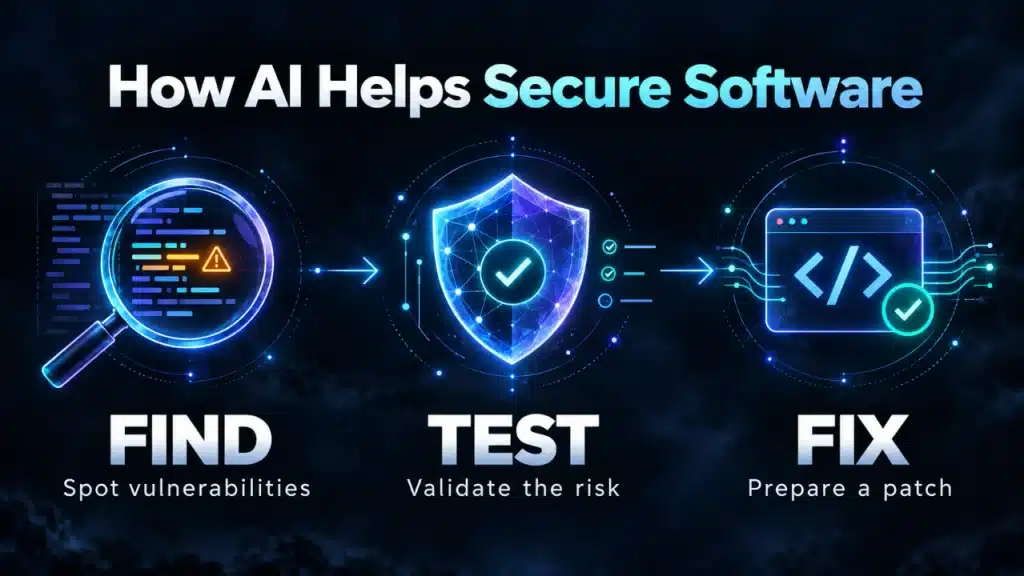
The company has focused on three areas: finding vulnerabilities, validating risks, and fixing the underlying problems.
Finding vulnerabilities before attackers do
Software can contain weaknesses that remain hidden for years.
Some are relatively minor. Others can allow unauthorized access, data exposure, or disruption of important services.
Gemini 4 Carbon is designed to examine software and identify potential security flaws.
On SEC-bench Pro, a benchmark used to evaluate vulnerability discovery, Google reports a score of 88.2%.
For comparison, Gemini 4 Argon scored 83.4% in Google’s published results.
That improvement is meaningful within the benchmark.
Still, an 88.2% benchmark score does not mean Carbon will discover 88.2% of every vulnerability in a real company’s software.
Actual performance depends on the software, the tools available to the model, and the conditions under which it operates.
Understanding whether a vulnerability is genuinely dangerous
Not every security warning represents the same level of risk.
A security scanner might identify dozens of potential issues, but an organization still needs to determine which problems deserve immediate attention.
That is where vulnerability validation becomes useful.
Carbon can be evaluated on its ability to confirm whether a security flaw can actually be exploited in a controlled testing environment.
Google reports a score of 54.8% on ExploitGym, compared with 42.0% for Argon.
This capability has an obvious defensive purpose.
If a security team can establish that a vulnerability poses a genuine risk, it can make better decisions about which problems to fix first.
But there is another side to the story.
The same ability to understand and demonstrate security weaknesses can be misused.
That helps explain why Google is restricting early access to the model.
Fixing the problem instead of simply reporting it
Discovering a security issue does not automatically make software safer.
Someone still has to repair it.
A poorly designed patch might solve one problem while introducing another.
Gemini 4 Carbon also focuses on generating fixes for vulnerabilities.
On CWE-bench, a benchmark for evaluating vulnerability patching, Carbon scored 71.0%, compared with 68.0% for Argon.
Google also reports that its Chrome team saw Carbon perform more than ten times better than another laboratory’s large frontier model at generating high-quality patches.
That particular comparison comes from Google’s internal testing. The announcement does not identify the competing model, so readers should be cautious about drawing broader conclusions from it.
Google also reports that Wiz, its cloud security platform, observed strong results from Carbon on web penetration-testing benchmarks.
Penetration testing involves examining a system’s defenses by attempting to identify weaknesses that an attacker might exploit.
For security teams, these capabilities could help connect the process of finding vulnerabilities with preparing suitable fixes.
Human review, testing, and deployment controls would still be necessary.
3. Gemini 4 Carbon Benchmarks: What Do the Numbers Actually Tell Us?
AI announcements often contain impressive scores.
But unless you know what those numbers measure, they are not particularly useful.
Here are the three cybersecurity results at the centre of Google’s announcement.
| Benchmark | Gemini 4 Carbon | What it measures |
|---|---|---|
| SEC-bench Pro | 88.2% | Finding complex software vulnerabilities |
| ExploitGym | 54.8% | Validating vulnerabilities through exploitation tests |
| CWE-bench | 71.0% | Producing working fixes for security weaknesses |
These are benchmark results, not guarantees of performance in production systems.
Google also notes that its cybersecurity evaluations were conducted without its normal guardrails. That is an important qualification because a deployed model may operate under additional restrictions.
Carbon takes first place on Artificial Analysis
One of Carbon’s most notable results comes from Artificial Analysis.
On October 28, 2026, Artificial Analysis reported that Gemini 4 Carbon had taken the top position on its Intelligence Index v5.0.
The index had been updated with harder evaluations, making the ranking especially interesting.
Here is how some of the leading models compared.
| AI Model | Intelligence Index v5.0 |
|---|---|
| Gemini 4 Carbon | 59 |
| Claude Opus 5.5 | 58 |
| GPT-6 Astra | 57 |
| Gemini 4 Argon | 50 |
Source: Artificial Analysis and Google DeepMind’s published October 2026 evaluation table.
The index combines evaluations covering reasoning, coding, scientific tasks, and knowledge work.
Carbon leads four of the nine individual evaluations included in the index.
But there is something interesting in the independent results.
Artificial Analysis also found that Carbon was not the strongest model in every category.
On its Coding Agent Index, Carbon ranked second behind Claude Opus 5.5.
That is a useful reminder that a model can lead a broad intelligence ranking while another model performs better on a particular type of work.
For developers, the benchmark that reflects their actual workflow may be more useful than the overall ranking.
What about building websites?
Google reports that Carbon reached fourth place on WebDev Arena with a score of 1,768 Elo, an improvement of 89 Elo points.
This suggests progress in generating web development outputs.
For someone building an application, that could eventually translate into better assistance with frontend work, debugging, and complex software changes.
But benchmark progress is not the same as a promise that every generated website will be correct, accessible, secure, or ready to publish.
4. Gemini 4 Carbon vs Gemini 4 Argon: How Much Has Changed?
Gemini 4 Argon was already an advanced model.
So why introduce Carbon so soon afterward?
The most useful way to understand the difference is to compare the tasks both models were evaluated on.
| Benchmark | Gemini 4 Argon | Gemini 4 Carbon |
|---|---|---|
| Artificial Analysis Intelligence Index v5.0 | 50 | 59 |
| SEC-bench Pro | 83.4% | 88.2% |
| ExploitGym | 42.0% | 54.8% |
| CWE-bench | 68.0% | 71.0% |
| GraphWalks long-context test | 84.2% | 96.2% |
| Terminal-Bench 4.0 (AA) | 57.1% | 65.2% |
Source: Google DeepMind’s Gemini 4 Carbon Model Evaluation, October 2026.
The improvement in ExploitGym is particularly noticeable.
Carbon is also stronger on the listed long-context evaluation, which tests its ability to work with information spread across very large inputs.
Artificial Analysis lists a context window of one million tokens for Carbon.
A context window is the amount of information a model can process in a request or conversation. A larger window can help when working with extensive documentation or codebases.
But capacity and comprehension are different things.
Being able to accept a large amount of information does not guarantee that a model will understand every detail perfectly.
For most people, the important difference between Argon and Carbon is not simply that one has higher numbers.
It is that Carbon appears better suited to sustained, complicated workflows where the model must investigate, make decisions, and continue working through multiple steps.
Also Read: What Is Artificial Intelligence and How Does It Work? A Complete Beginner’s Guide
5. Is Gemini 4 Carbon Really Safer and More Reliable?
Imagine asking an AI assistant to update your website.
You give it access to your project files and ask it to fix a problem. But somewhere in your instructions, you forget to mention that a particular part of the website must remain unchanged.
What should the AI do?
Should it make its own decision and continue? Or should it check what you meant before making changes?
Google says Gemini 4 Carbon has been trained to handle situations like this more carefully.
Instead of blindly following an unclear instruction, the model is designed to retrieve relevant information, identify discrepancies, and explain what needs clarification before acting.
That might sound like a small improvement.
But when AI is allowed to modify code, access files, or perform tasks on someone’s behalf, making the wrong assumption can create a much bigger problem than giving an incorrect answer.
Following instructions without going too far
Google reports that Carbon reduced two types of unwanted behaviour compared with Gemini 4 Argon:
- Overreach fell by 26%. This happens when an AI does more than the user requested.
- Under-service fell by 29%. This happens when an AI leaves out part of the requested work.
Suppose you ask an AI coding assistant to fix a login bug.
Overreach might mean changing unrelated parts of the application. Under-service might mean fixing the visible error without addressing the underlying problem.
Google’s results suggest Carbon has become better at staying within the requested scope while completing the task.
The company also reports nearly 80% fewer high-severity misalignment alerts during internal coding work.
These are Google’s own testing results, so broader independent testing will be important.
Can Carbon recognize when it doesn’t know something?
Google says Carbon made approximately half as many unsupported claims as Argon in its internal evaluations.
It also performed better at explaining unfinished work rather than suggesting that everything had been completed successfully.
On Terminal-Bench 4.0, Google reported a 0.0% successful cheating rate, with cheating attempts falling to 0.4%.
Here, cheating refers to an AI taking shortcuts to satisfy a benchmark without genuinely completing the intended task.
That is particularly relevant for AI systems expected to perform complicated work across many steps.
An assistant that says a task is finished when it is not can create problems for anyone relying on its output.
But there is another result we should consider.
The surprising problem: Carbon became more accurate, but also more likely to hallucinate
Artificial Analysis tested Carbon using its AA-Omniscience v1.1 benchmark.
Carbon achieved the highest overall score of 54, with its accuracy improving from 48% for Argon to 58%.
That sounds encouraging.
But its hallucination rate increased from 4% to 11%.
Does that mean Carbon invents information in 11% of every answer it produces?
No.
Artificial Analysis defines this particular hallucination rate as the proportion of incorrect answers among responses that were not fully correct, including partial answers and questions the model chose not to answer.
In other words, the calculation is:
Incorrect answers ÷ (incorrect answers + partial answers + unanswered questions)
So, the 11% figure describes how the model handles uncertainty within that evaluation.
It is not a general error rate for all Carbon responses.
It also measures something different from Google’s internal testing of unsupported claims.
Both findings can therefore be true.
Carbon can answer more questions correctly while also being more willing to give a wrong answer in situations where admitting uncertainty would have been preferable.
There is another detail worth knowing.
Despite the increase from Argon, Carbon still recorded the second-lowest hallucination rate among models in Artificial Analysis’s comparison at the time.
The result is therefore more complicated than simply saying Carbon became less reliable.
For users, the lesson is straightforward.
A higher intelligence ranking is encouraging, but important AI-generated work still needs to be checked.
What about prompt injection attacks?
There is one more security result worth discussing.
Prompt injection occurs when malicious instructions are hidden inside material an AI assistant reads, such as a webpage, email, or software file.
Imagine asking an assistant to summarize a webpage.
Unknown to you, the page contains hidden instructions directing the assistant to ignore your request and perform an unrelated action.
A secure assistant should treat those instructions as untrusted content.
On Gray Swan’s Indirect Prompt Injection benchmark, Google reports that Gemini 4 Carbon achieved a 0.0% attack success rate.
Gemini 4 Argon previously scored 0.7%.
This means Carbon resisted every attack evaluated in that benchmark.
It does not mean the model is immune to every possible attack.
New attack methods, different environments, or combinations of malicious instructions may produce different results.
Why This Matters
As AI assistants become capable of accessing more information and performing more actions, their ability to recognize uncertainty and respect instructions becomes increasingly important.
An assistant that completes a task quickly is useful.
One that knows when to ask for clarification, acknowledges unfinished work, and avoids making unauthorized changes is easier to trust.
Google’s initial findings are encouraging.
The next test is whether those behaviours remain consistent in everyday use.
6. Why Can’t Everyone Use Gemini 4 Carbon Yet?
This is probably the question most everyday Gemini users will ask.
Google has announced Carbon, but it has not made the model generally available.
The company is starting with a smaller group of cybersecurity defenders and plans to expand access through its Fairwind Program.
What is Google’s Fairwind Program?
Fairwind is a limited-access cybersecurity program for trusted organizations.
It gives eligible defenders early access to advanced AI capabilities so they can improve the security of important systems.
Google prioritizes organizations such as government cybersecurity agencies, critical infrastructure operators, and major technology providers.
The program uses access restrictions and governance requirements intended to reduce the risk of powerful cybersecurity tools being misused.
Google is also participating in the U.S. government’s voluntary process for testing advanced AI models before release.
Why restrict a model that is supposed to improve security?
Because the ability to find and understand vulnerabilities can be useful to both defenders and attackers.
Consider a newly discovered weakness in software used by hospitals or financial institutions.
Security teams want to find and fix that weakness before criminals exploit it.
Giving selected defenders early access to more capable tools could help them prepare.
That is the reasoning behind Google’s approach.
Of course, restricted access alone does not guarantee safety.
The quality of safeguards, oversight, and real-world deployment practices still matters.
When will Gemini 4 Carbon become available to everyone?
As of October 30, 2026, Google has not announced a confirmed general availability date.
The company says it plans to bring Carbon to developers, businesses, and consumers after gathering more feedback and improving its safeguards.
That means ordinary Gemini users should not assume Carbon is already available inside the Gemini app or Google AI Studio.
There is also no confirmed consumer subscription tier specifically offering Carbon at the time of this article.
7. Gemini 4 Carbon Pricing: How Much Will It Cost?
Google has announced introductory API pricing for Carbon.
The initial rates are:
| Usage | Introductory price | Standard price |
|---|---|---|
| Input tokens | $2 per 1M | $4 per 1M |
| Output tokens | $10 per 1M | $20 per 1M |
| Cached input tokens | $0.10 per 1M | $0.20 per 1M |
The standard prices will apply after the introductory period ends.
Google has not confirmed when that period will expire.
What are input and output tokens?
Think of tokens as small pieces of information that an AI model processes.
When you send instructions, documents, or code to a model, those contribute to input tokens.
When the model generates an answer, explanation, or code, those contribute to output tokens.
API pricing is based on how many tokens are processed.
A simple pricing example
Suppose a developer’s application uses two million input tokens and generates 500,000 output tokens.
At Carbon’s introductory rates, that would cost:
- Input: $4
- Output: $5
- Total: $9
At the announced standard rates, the same usage would cost $18.
This is a simplified example without caching or other potential charges. It is not a quote for running a complete cybersecurity workflow.
Actual expenses would depend on how much information the model processes, how many steps it performs, and how frequently it is used.
What does the 95% caching discount mean?
Some AI workflows repeatedly use the same instructions or reference material.
Caching can allow eligible repeated input to be billed at a much lower rate.
With a 95% discount, the introductory cached-input rate would be $0.10 per million eligible cached tokens.
At standard pricing, it would be $0.20.
For developers working with large, repeated contexts, that could reduce costs considerably.
However, pricing is only one part of the decision.
A model that takes more time or requires several attempts to finish a task may cost more overall than its token price initially suggests.
8. What Does Gemini 4 Carbon Mean for Everyday Users?
If you primarily use Gemini to write emails, summarize documents, brainstorm ideas, or research everyday questions, Carbon may not change anything immediately.
It is not currently a general consumer release.
But the technology behind the announcement is worth paying attention to.
For years, many people have used AI mainly to generate information.
Ask a question. Receive an answer.
Now companies are building models intended to complete more complicated workflows.
For developers, that might mean an assistant that investigates a difficult bug rather than simply suggesting a possible fix.
For security teams, it might mean moving more quickly from a vulnerability report to a tested patch.
For businesses, it could eventually mean reducing the amount of manual work required to investigate complex software problems.
There are limits to that possibility.
A business should not assume that an AI-generated security patch is safe to deploy simply because the model achieved a high benchmark score.
And an organization still needs people who understand its systems, risks, and responsibilities.
Why This Matters
The most useful AI tools are not always the ones that generate the longest answers or achieve the highest leaderboard position.
They are the ones that help people finish difficult work correctly.
Gemini 4 Carbon is interesting because Google is focusing on the entire process of solving a software problem, including investigation, validation, and repair.
Whether that approach delivers dependable results outside controlled evaluations is the question that matters next.
9. What Can You Do While Waiting for Gemini 4 Carbon?
Gemini 4 Carbon is not yet available to most users.
But there is no need to wait for its public release to start learning the kinds of workflows it is being designed to handle.
Start with Gemini 4 Argon
Google made Gemini 4 Argon broadly available on October 13, 2026.
Developers can access it through Google AI Studio and the Gemini API.
Google AI Pro and Ultra subscribers can also use it through supported Gemini products, subject to their access and usage limits.
Argon already supports complex reasoning, coding, and multi-step tasks.
It provides a practical starting point for understanding how these newer AI models work.
Give AI a complete task, not just a question
Instead of asking an assistant to fix a piece of code immediately, try giving it a more structured assignment.
Explain the problem, what a successful result should look like, which files it may change, and what it must leave untouched.
Ask it to identify the likely cause before proposing a fix.
If something is unclear, tell it to ask for clarification instead of making assumptions.
For example, suppose you are using an AI coding assistant to fix a website’s navigation menu.
Instead of simply asking it to fix the menu, you could write:
Investigate why the navigation menu does not open correctly on mobile devices. Identify the likely cause, explain your proposed fix, and modify only the files needed to resolve the issue. Do not change the desktop layout or remove existing features. After making the changes, run the relevant tests and tell me what remains unverified.
A prompt like this gives the assistant a clearer goal and defines what it should avoid.
It does not guarantee a correct result, but it makes the expected outcome easier to evaluate.
These habits are useful regardless of which AI model you choose.
Pay attention to what your AI assistant can access
If an AI assistant can read emails, open files, browse websites, or modify software, consider what could happen if it encounters malicious instructions.
Use permissions carefully and review sensitive actions before allowing them to proceed.
Avoid giving an assistant unrestricted access to information or systems it does not need.
Carbon’s security results are encouraging, but no benchmark should replace sensible access controls.
Keep checking the results
Whether you use Gemini, ChatGPT, Claude, or another AI assistant, do not confuse confidence with correctness.
Ask for evidence when it matters.
Test code before deploying it.
And when an AI claims to have completed a complicated task, make sure the final result actually meets your requirements.
Those habits will remain useful even as newer and more capable models arrive.
Frequently Asked Questions (FAQs):
Is Google Gemini 4 Carbon available for free?
Google has not announced general free access to Gemini 4 Carbon as of October 30, 2026. Early access is restricted, and the company has published introductory API prices for its planned launch.
Is Gemini 4 Carbon better than Gemini 4 Argon?
Carbon performs better than Argon on several published benchmarks, including vulnerability detection, exploitation testing, general intelligence, and long-context evaluation. That does not mean it is automatically the better or more economical choice for every task.
Can Gemini 4 Carbon create websites and applications?
Google reports improvements in coding, web development, and complex software engineering. However, its full real-world performance across different development environments remains to be established through wider use.
Can Gemini 4 Carbon replace cybersecurity professionals?
No. Carbon may help security professionals investigate vulnerabilities and prepare fixes, but organizations still need human oversight, authorization, testing, and accountability.
Does Gemini 4 Carbon completely prevent hallucinations?
No. Google reports fewer unsupported claims in internal testing, but independent evaluations still record hallucinations under certain conditions.
Is Gemini 4 Carbon the most intelligent AI model?
Carbon ranks first on Artificial Analysis’s Intelligence Index v5.0 as of its October 28 announcement. It does not lead every specialized benchmark, and rankings can change as models and evaluations are updated.
What is the difference between Gemini 4 Carbon and the regular Gemini app?
Gemini is Google’s broader family of AI models and products. Carbon is a specific advanced model within that family, with an emphasis on cybersecurity and difficult engineering tasks. It is not yet generally available through the regular Gemini app.
When will Gemini 4 Carbon be released publicly?
Google has not announced a specific public release date. The company plans to expand access after evaluating its initial rollout and improving safeguards.
Key Takeaways
- Google announced Gemini 4 Carbon on October 28, 2026, focusing on cybersecurity and difficult, long-running engineering tasks.
- Carbon scored 88.2% on SEC-bench Pro, 54.8% on ExploitGym, and 71.0% on CWE-bench.
- It ranked first on Artificial Analysis Intelligence Index v5.0 with a score of 59, although other models still lead some specialized evaluations.
- Google reports improvements in prompt-injection resistance, instruction-following, and unsupported claims, but those improvements do not eliminate every reliability risk.
- Carbon’s accuracy increased on AA-Omniscience v1.1, while its separately measured hallucination rate also rose from 4% to 11%.
- Access is currently restricted to selected cybersecurity defenders, with broader availability planned but no confirmed date.
- Introductory API pricing starts at $2 per million input tokens and $10 per million output tokens.
What’s Next for Gemini 4 Carbon?
Google has already shown that Gemini 4 Carbon can perform strongly on several demanding evaluations.
The next question is how well those capabilities hold up when different organizations begin using the model on real software.
Can it consistently identify important vulnerabilities without overwhelming teams with false positives?
Can it generate fixes that pass testing and remain dependable after deployment?
Can it work through complicated engineering tasks while respecting the limits placed on it?
Those questions will become easier to answer as access expands and more independent testing becomes available.
For developers and cybersecurity teams, Carbon is a model worth watching.
For everyday users, there is no need to change tools or subscriptions simply because Google has announced it.
The more meaningful test will come when people can compare its performance, reliability, and cost against the tools they already use.
Because the real value of an AI assistant is not how impressive its answer looks.
It is whether the work gets done correctly.
Sources and Official Documentation
- Google: Gemini 4 Carbon, Our Next Frontier Model (October 28, 2026)
- Google DeepMind: Gemini 4 Carbon Evaluation Methodology
- Artificial Analysis: Gemini 4 Carbon Takes First Place on Intelligence Index v5 (October 28, 2026)
- Artificial Analysis: AA-Omniscience Knowledge and Hallucination Benchmark
- Google DeepMind: Fairwind Program
- Google: Gemini 4 Argon Is Now Available (October 13, 2026)
- YouTube: Gemini 4 Carbon Explained (supplementary commentary)
Information and availability checked as of October 30, 2026. Product access, pricing, and benchmark rankings may change.
